
Food Packaging Design for CPG Brands & Food Startups
Most food products fail at retail before anyone reads the ingredient list, checks the nutrition panel, or looks at the price. They fail because the packaging doesn’t stop anyone long enough to do any of that. A consumer moving through a grocery aisle sees hundreds of products per minute. The decision to reach for something happens in under two seconds — largely unconsciously, largely based on color, shape, and whatever the eye catches first. Your food packaging design is doing that work, not your product, not your story, not your price. We design food packaging for CPG brands, food startups, and beverage companies across the US, Europe, Canada, and Australia. Award-winning agency with 10+ years. This is what we do.
Why Food Packaging Design Is Different from Other Categories
Food packaging has constraints that don’t exist in most other categories. Every design decision has to account for regulatory requirements, production realities, and retail environment simultaneously. The label on a premium craft snack has to include an ingredient list, a Nutrition. Facts Panel, allergen declarations, net weight, and manufacturer information — all mandated by FDA. None of that is optional. The design has to make all of it clean and compliant while still looking like something a consumer would want to pick up. That’s a harder brief than most design projects.
Then there’s the shelf reality. Food retail is the most visually competitive environment your packaging will ever be in. A grocery store carries 40,000+ SKUs. Your granola is sitting next to five other granolas. Your frozen fruit pouch is surrounded by twenty similar products. The packaging has to communicate your brand’s specific value — healthier, tastier, more premium, more affordable, more sustainable — in the two seconds before someone moves on.
And then there’s production. Food packaging is printed on flexographic or digital presses, applied to pouches, boxes, jars, or cartons using automated equipment running at high speed. A design that looks perfect in a mockup can fail in production if the color separations aren’t right, the bleed isn’t adequate, or the file isn’t built to the printer’s exact specifications.
The Three Mistakes Food Brands Make Most Often
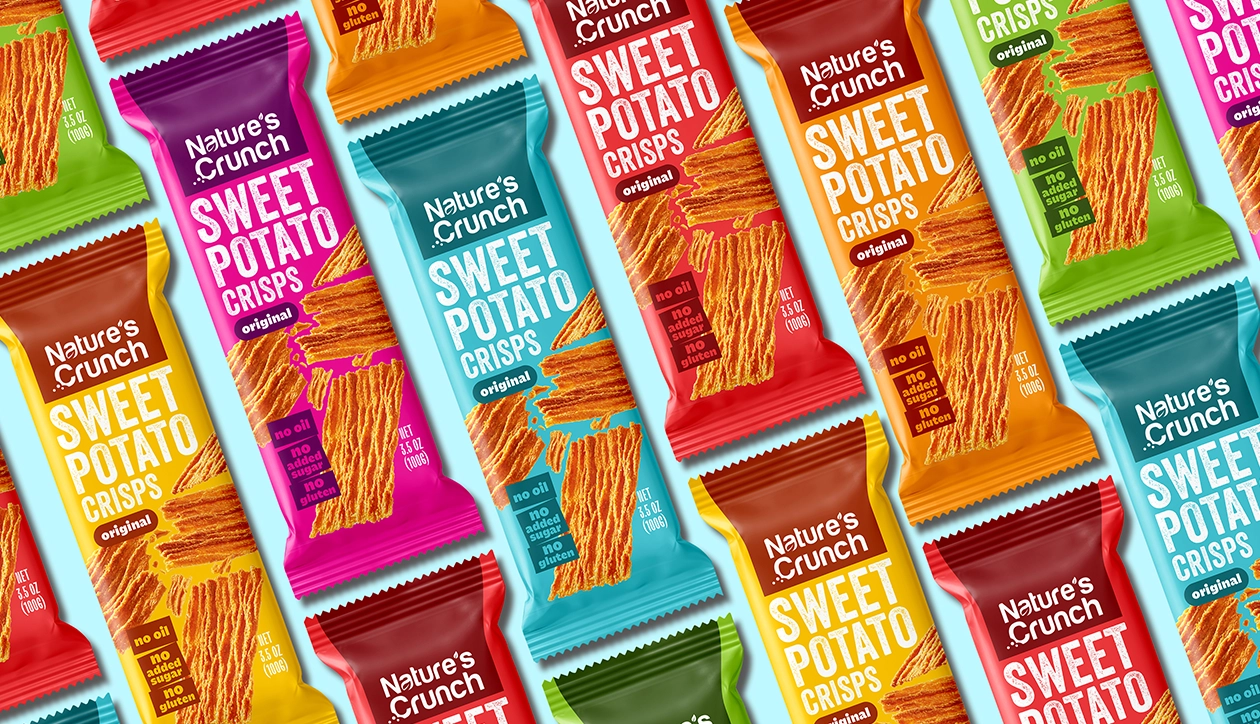
Designing for the Instagram photo, not the shelf. A lot of food packaging is designed to look good in a flat lay on a white background. That’s a different visual problem than looking good in a refrigerated case with rough colourful lighting, surrounded by competing products, at arm’s length. We design for where the package really sells. Treating regulatory text as an afterthought. The Nutrition Facts Panel, ingredient list, and allergen declarations are often the last things added to a food packaging design — whatever space is left over. This leads to cramped, ugly text that fails FDA requirements and looks unprofessional. We build compliance into the layout from the start.
No system for line extensions. A brand launches with one SKU. Six months later they have three flavors, two sizes, and a limited edition. Each variation gets designed individually and the result looks like three different brands. We design product families, not individual packages.
Food Packaging Design Services — What We Create
Flexible Packaging — Pouches, Bags & Sachets
Stand-up pouches, flat-bottom bags, spouted pouches, and stick packs are the dominant format in the premium food category. They’re lightweight, shelf-stable, visually flexible, and they work for everything from granola to coffee to protein powder. The design challenge with flexible packaging is working with a surface that changes shape when filled. A design that looks balanced on a flat, empty pouch can look completely different when the bag is full and the gusset expands. We prototype with filled samples before finalizing production files.
Multi-layer flexible packaging — the kind used for products with long shelf life requirements — has strict print specifications that vary by substrate. Barrier films for high-fat products, moisture-sensitive dry goods, and oxygen-sensitive coffee behave differently on press. We build files to the printer’s exact specifications, not to a generic template.
Rigid Packaging — Boxes, Cartons & Cases
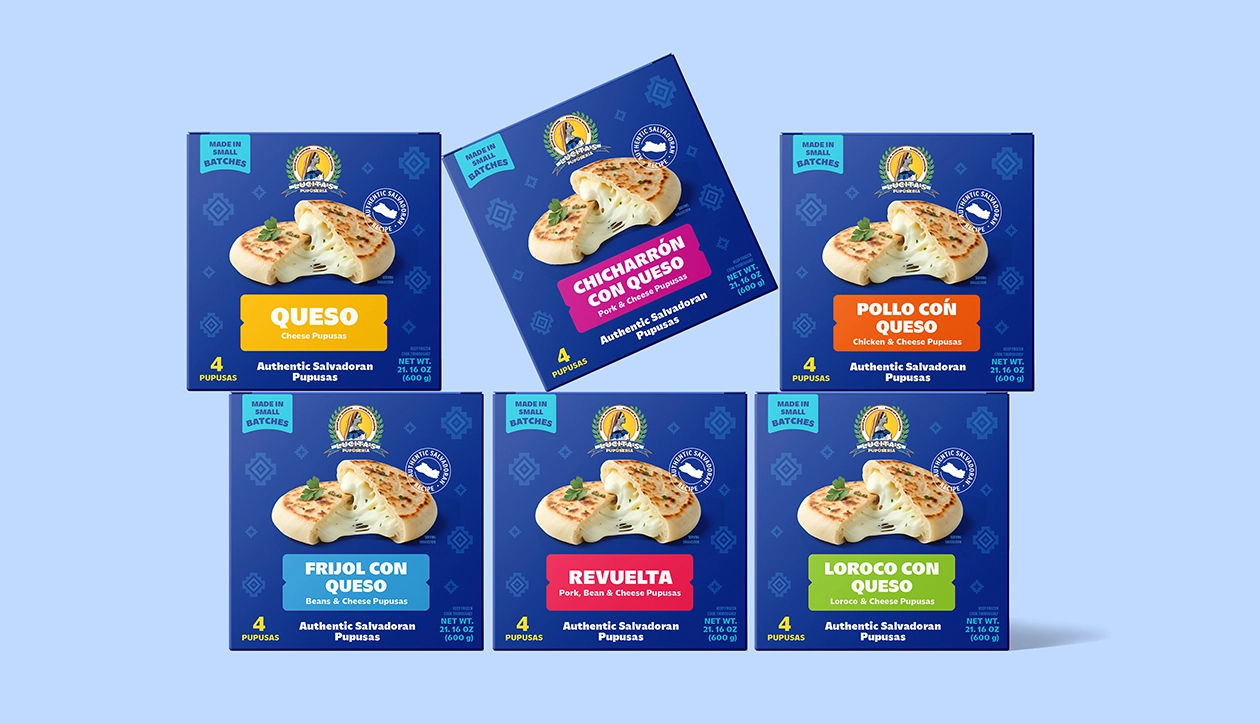
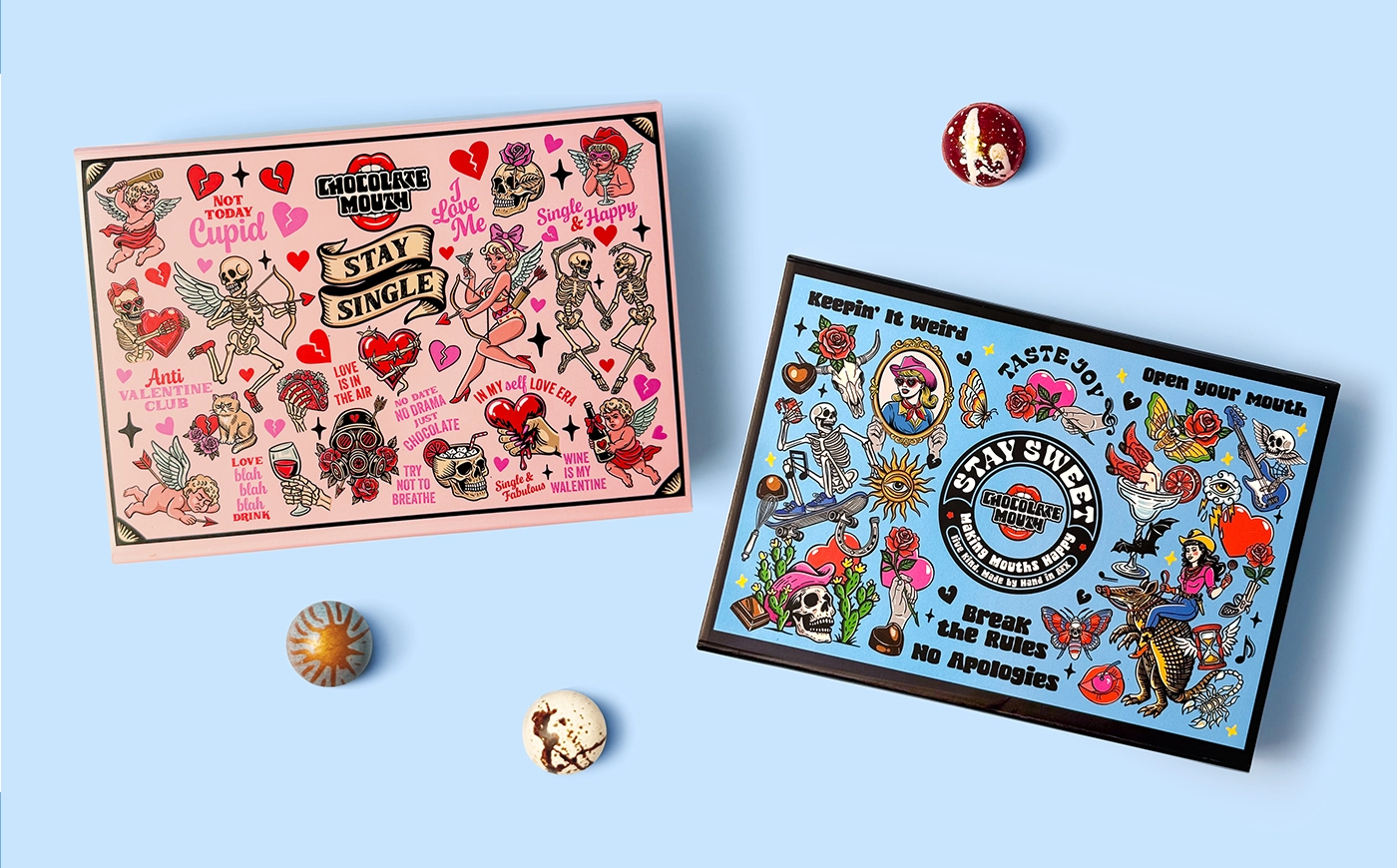
Paperboard cartons, folding boxes, and rigid cases are the original format for dry goods, frozen food, and premium gift packaging. The structural engineering of a carton — how it unfolds, where it glues, how it stacks — is a separate discipline from the surface design, and the two have to work together. We design dielines from scratch or adapt from manufacturer-provided templates. Every element of the printed surface — panels, top flaps, bottom panels, tuck tabs. — is accounted for in the file. We confirm fold lines and bleed areas before any design work gets approved for production.
For frozen food packaging specifically, the substrate has to maintain structural integrity at -20°C while remaining visually appealing through a layer of frost. Condensation-resistant coatings, high-saturation photography, and careful color choices are all part of the brief.
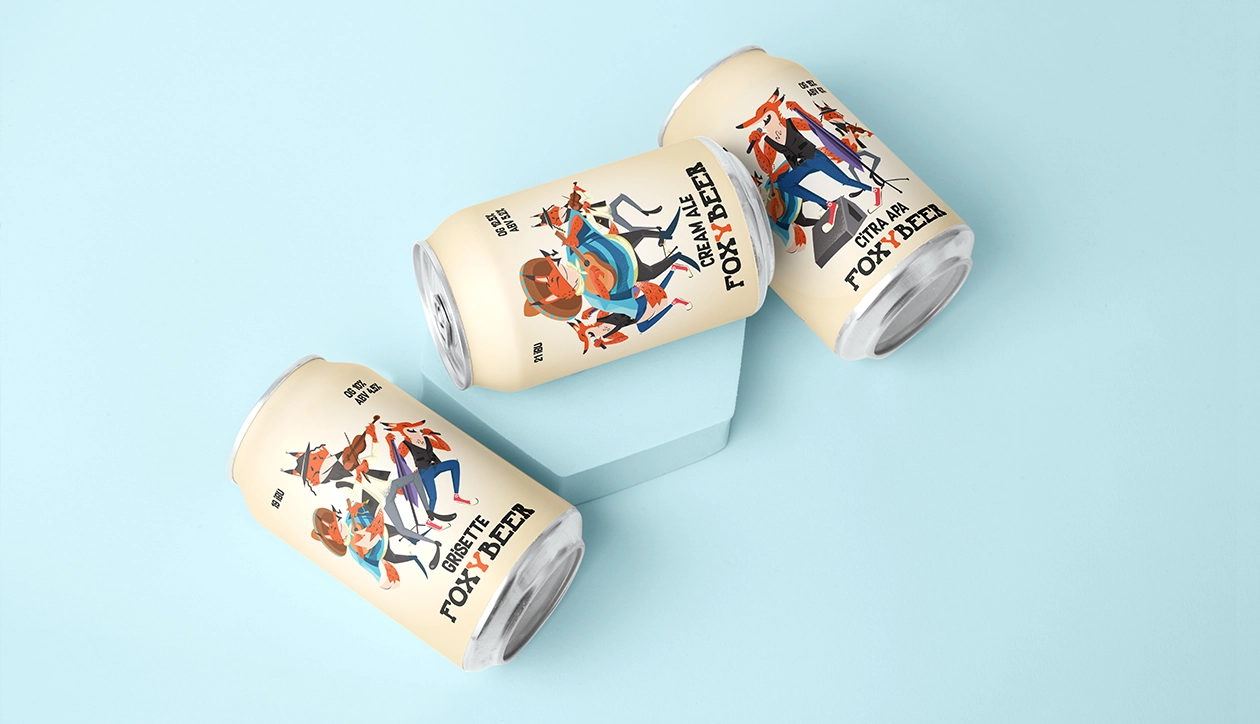
Labels — Glass Jars, Bottles & Cans
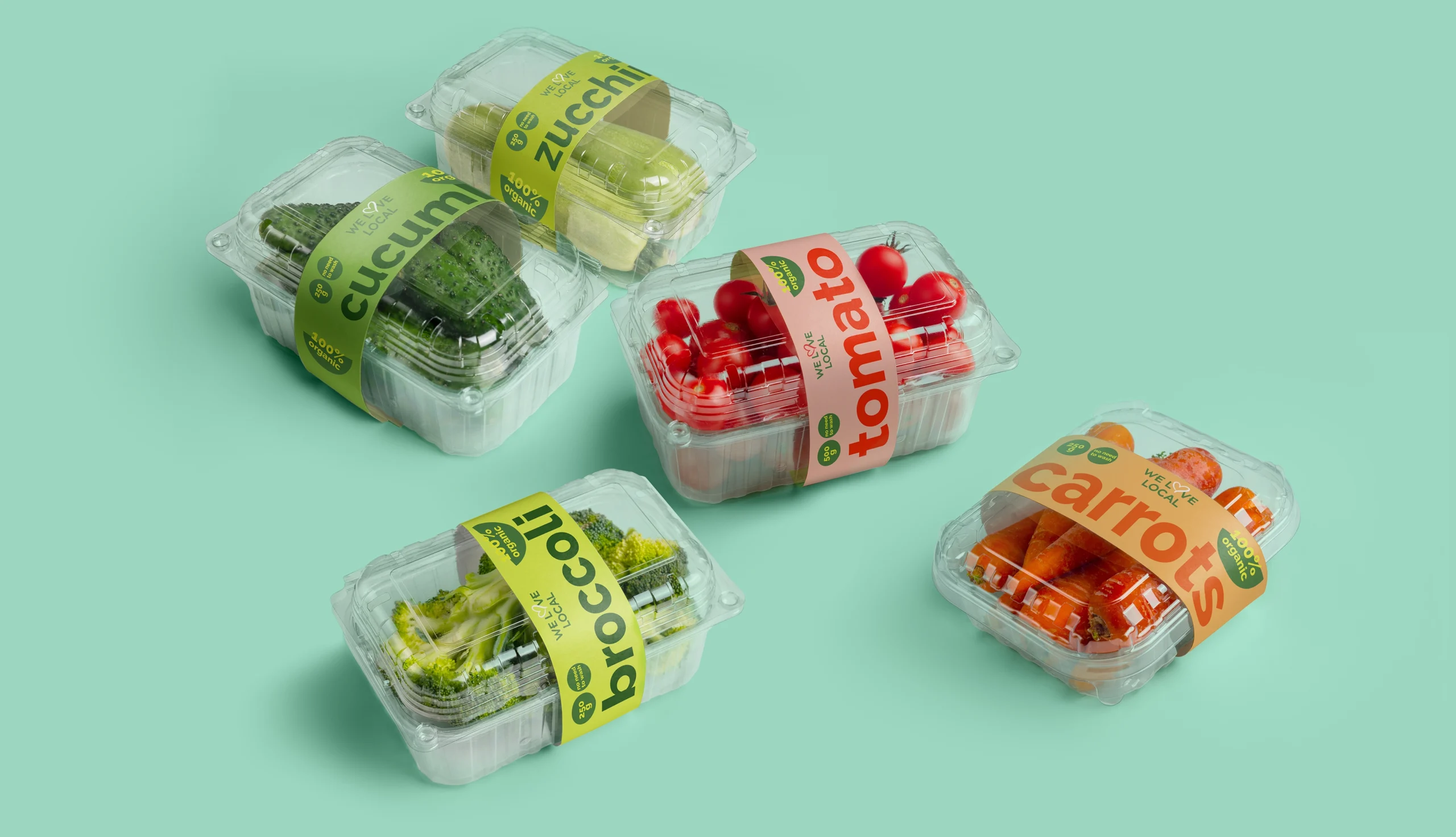
Sauce bottles, jam jars, oil bottles, canned goods — products sold in rigid containers need label design that works on a curved surface, reads correctly in a retail context, and prints accurately on pressure-sensitive label stock. A label applied to a glass jar is printed on a different material than a label applied to a metal can, and both are different from a shrink sleeve. We design to the specific label format the client’s manufacturer uses — including bleed, safe zone, and any substrate-specific color considerations.
For food products using front + back labels, we design both as part of the same system. The back label often carries the full regulatory burden — ingredient list, nutrition panel, allergen text, manufacturer address — and still needs to look considered, not crammed.
Food Service & Restaurant Packaging
Cups, bags, boxes, wrappers, and branded takeaway packaging for restaurant and food service brands operate on a different logic than retail packaging. The customer is already at point of sale. The packaging’s job is to reinforce the brand experience, not to sell the product. Restaurant branding extends the identity of the space into the customer’s hands and, usually, out the door. A paper bag or coffee cup that looks good is free advertising. One that looks generic or cheap communicates something about the food inside. We’ve designed food service packaging for quick-service restaurant concepts alongside full brand identity systems — the packaging and the brand developed simultaneously so they read as a coherent whole.
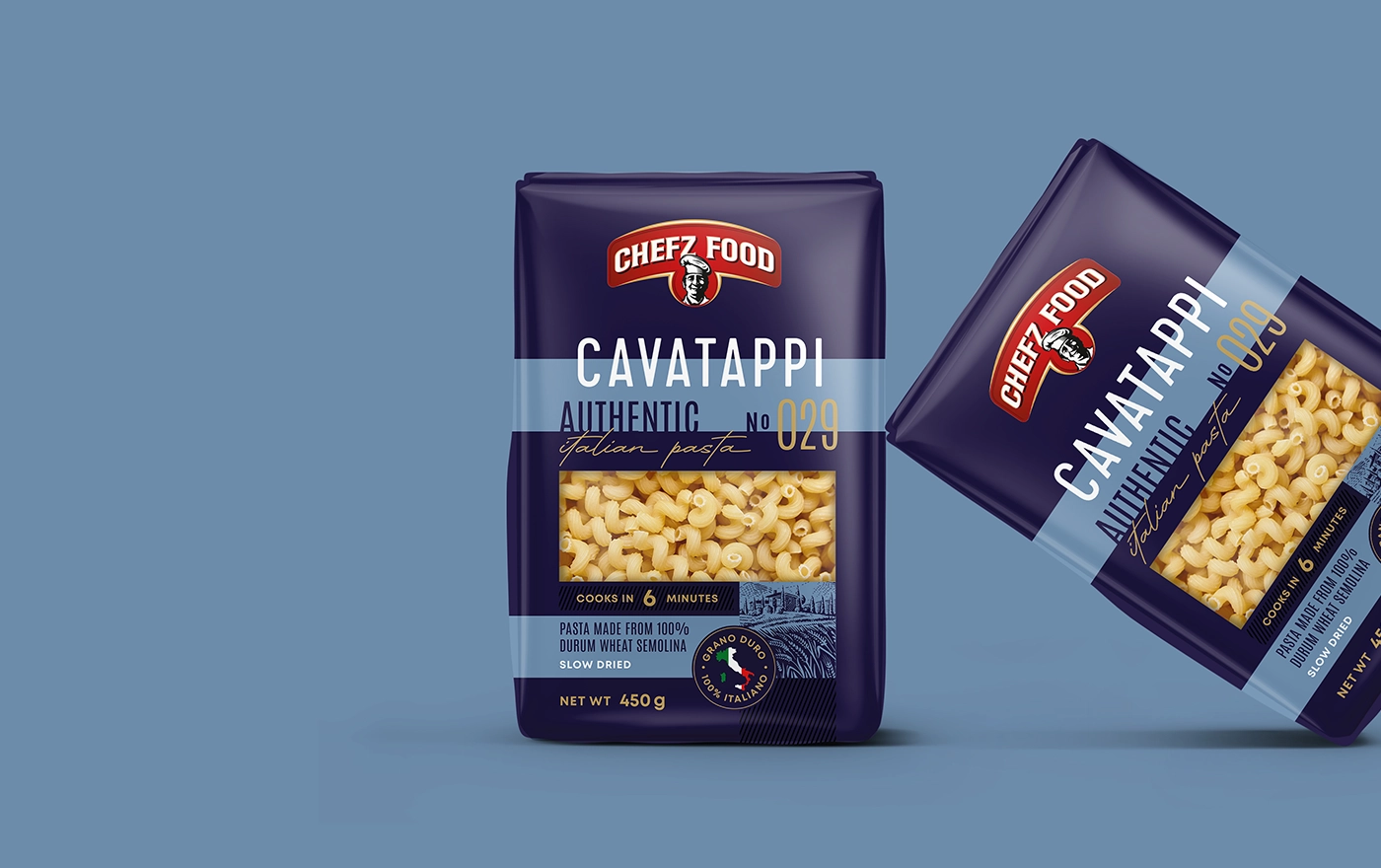
Our Food Packaging Design Portfolio
Seven food and beverage packaging projects across the US, Europe, and Australia. Each client was at a different stage, in a different category, and required something different from the design.
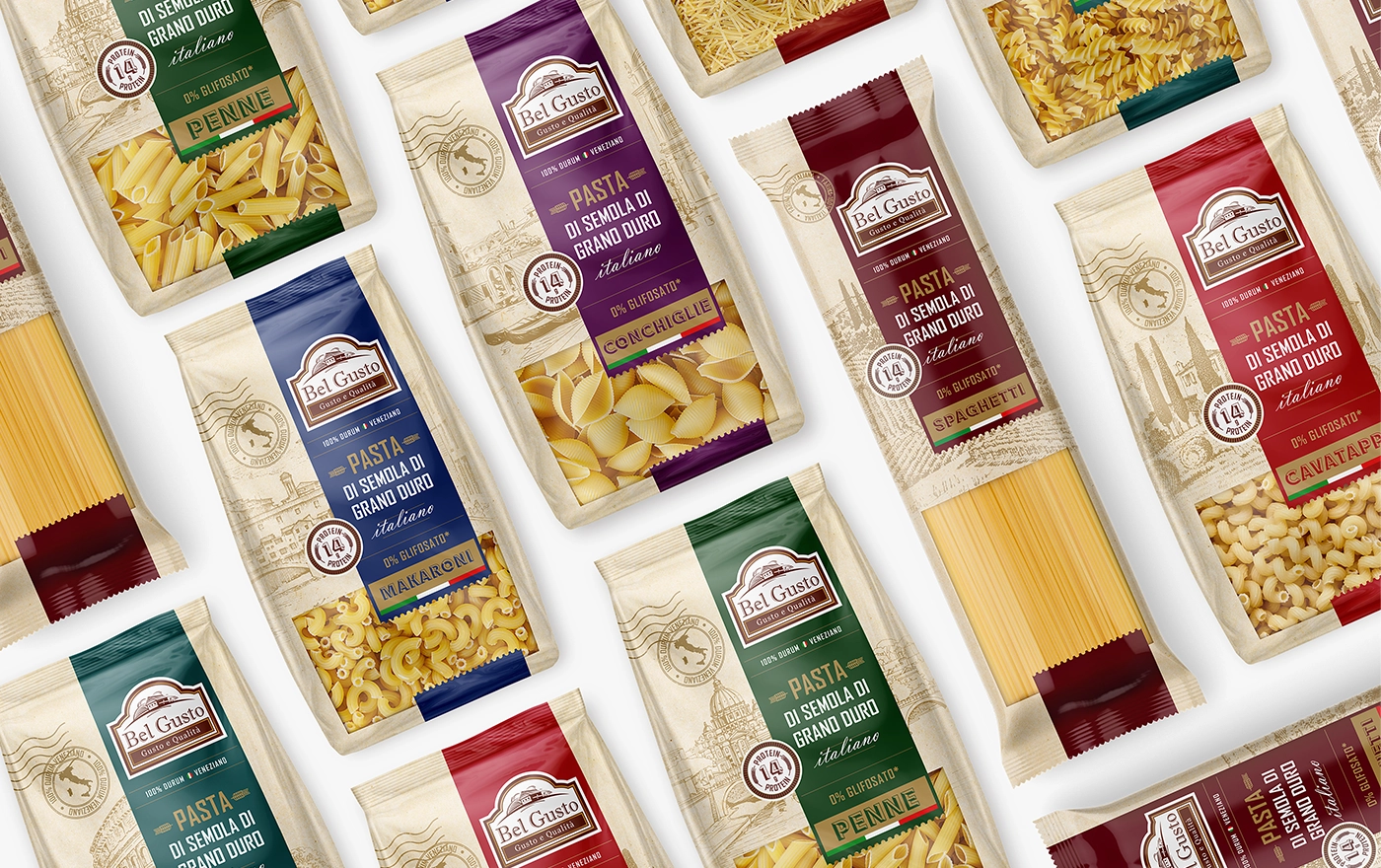
Pasta Bel Gusto
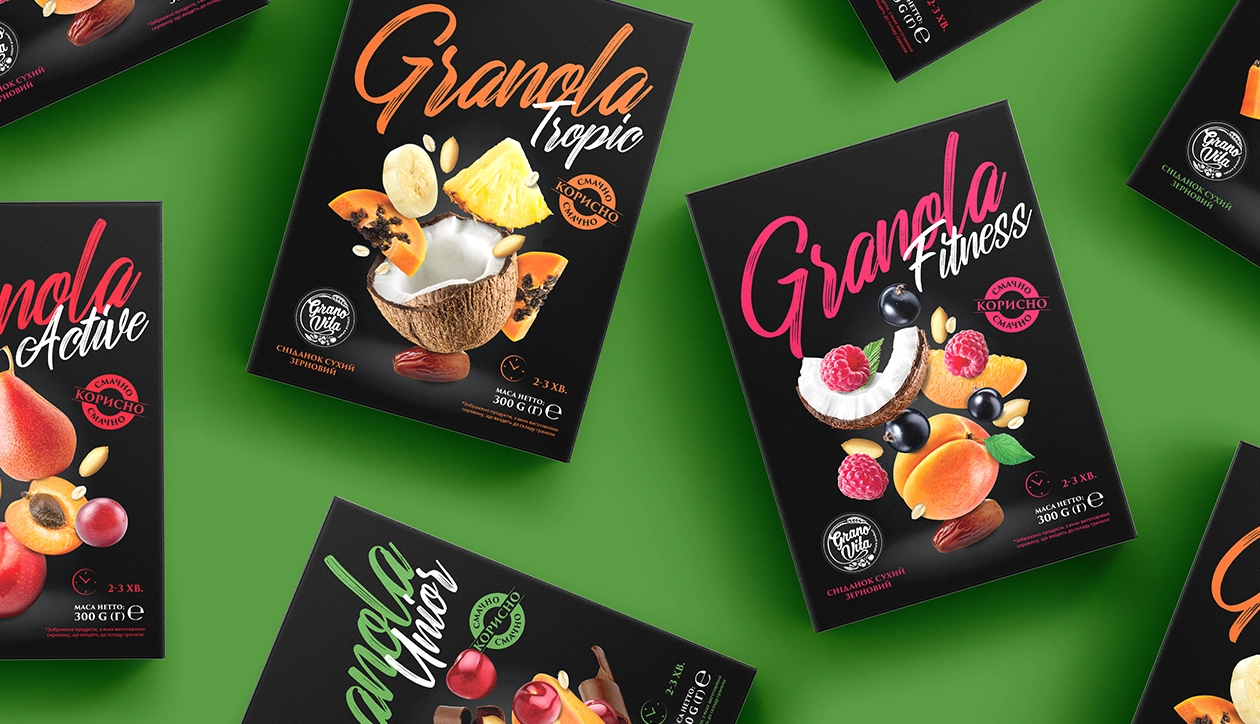
Granola Brand
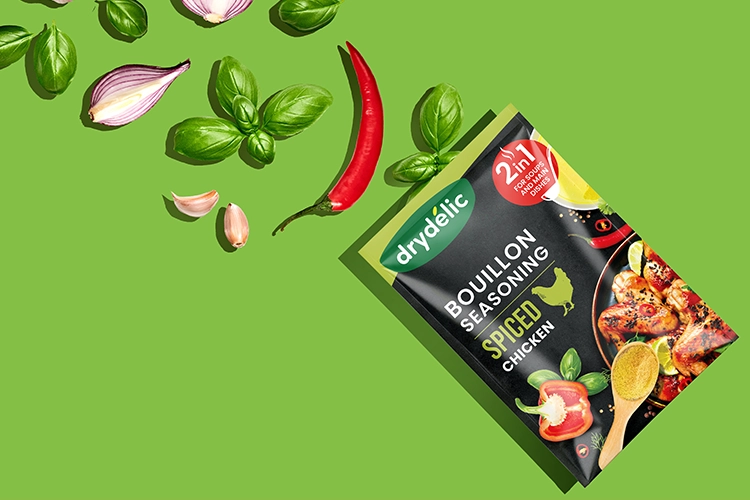
Soups & Seasonings Collection
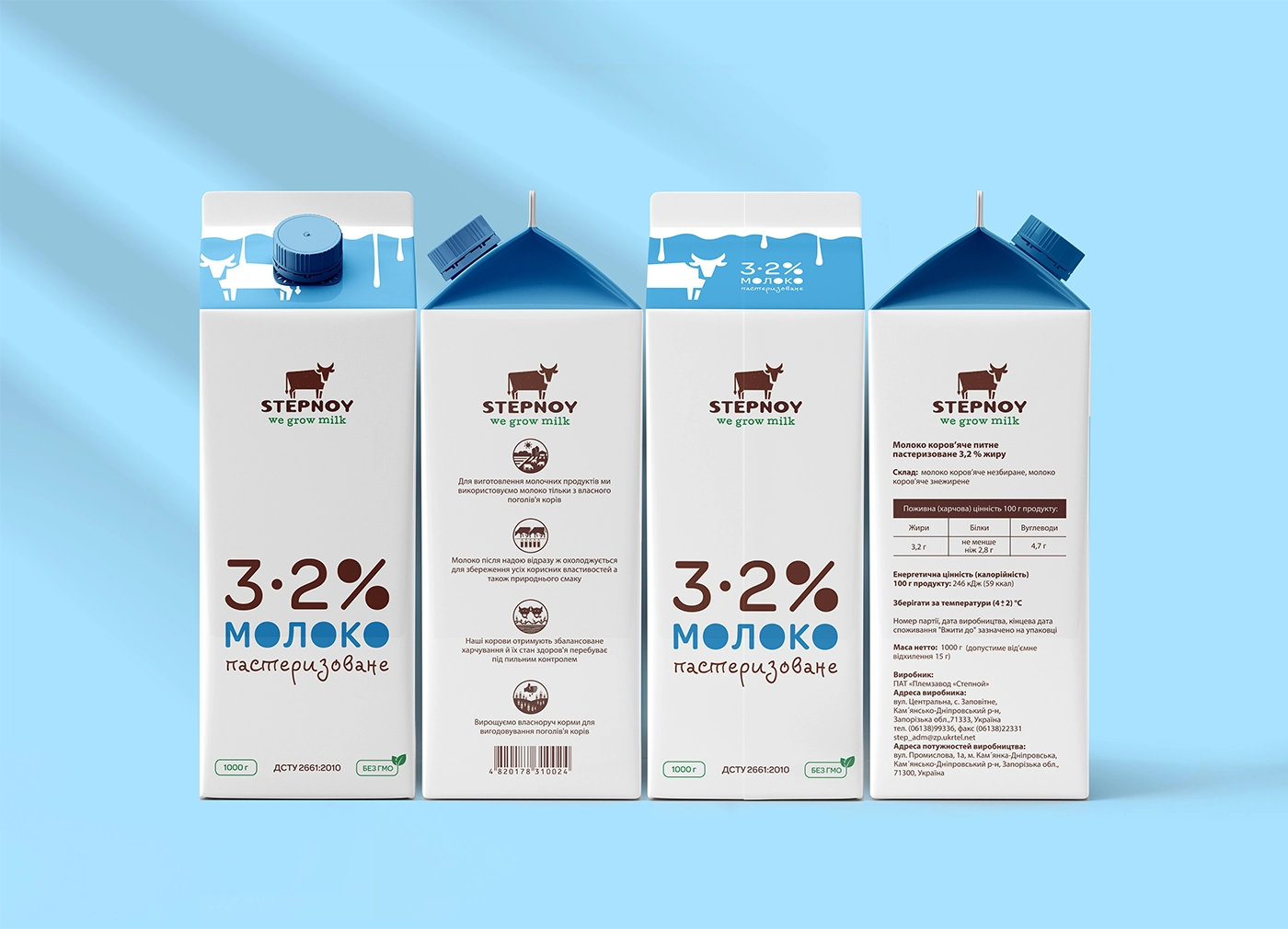
Stepnoy Dairy Products
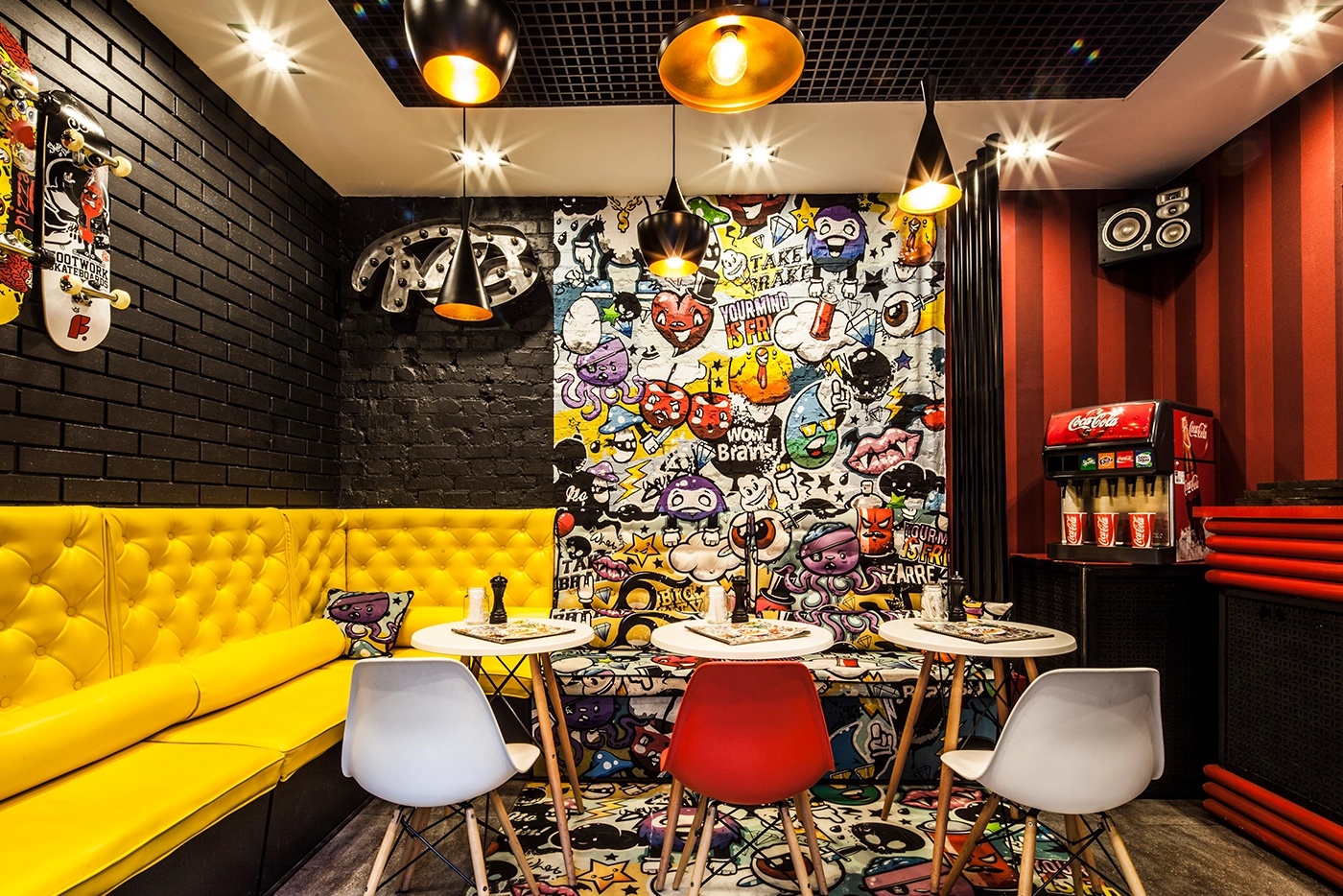
Pita Gyros — Gourmet Fast Food
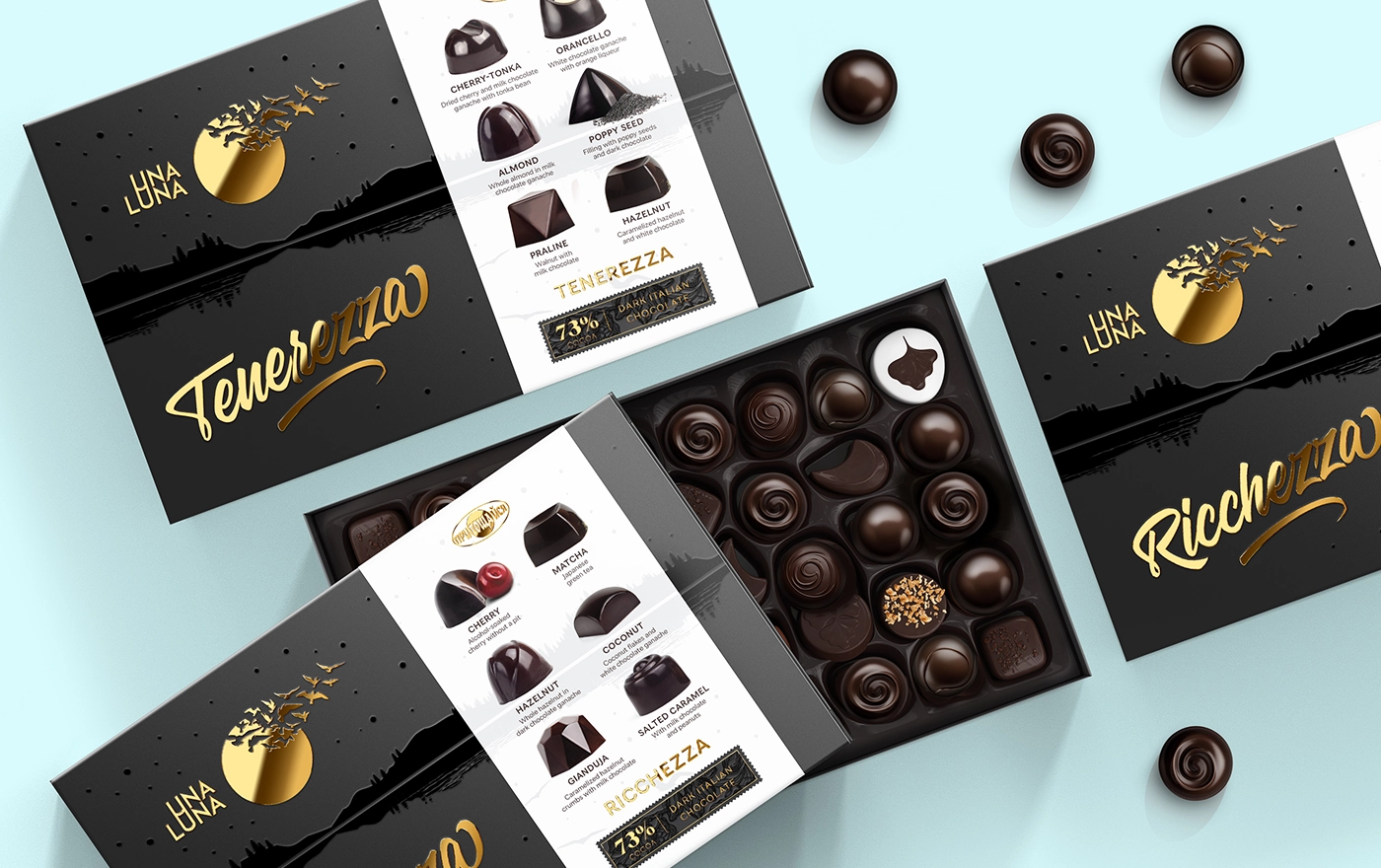
Una Lunas Fruit
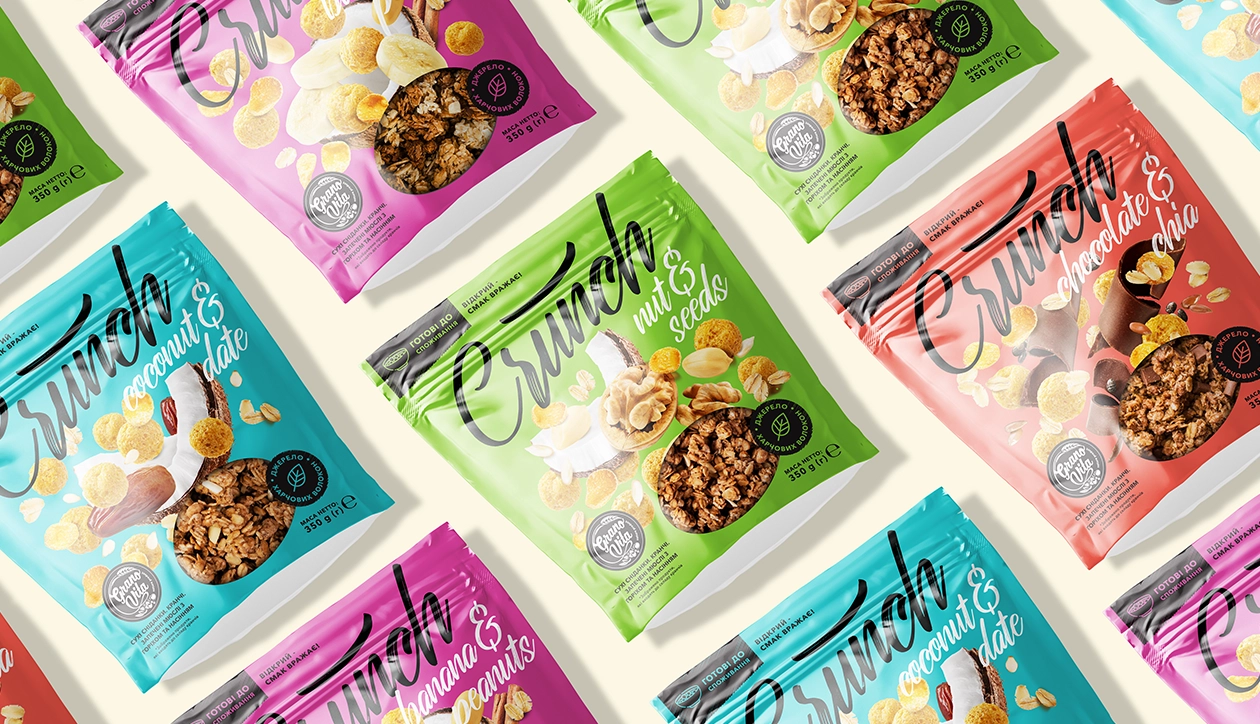
Crunchy Snacks
our clients
We feel so fortunate to have found SOTDESIGN for our packaging design services. We received world-class design for a very affordable price, and on top of all that, Olha is a pleasure to work with and extremely accommodating. Super talented and smart - would highly recommend!














FDA Labeling Requirements for Food Packaging
Food packaging sold in the US must comply with FDA labeling requirements. Non-compliant packaging can result in product recalls, retailer delistings, and legal liability — none of which are hypothetical risks. The mandatory elements for most packaged food products:. Nutrition Facts Panel mandatory format specified by FDA, including serving size declaration, calorie count, and mandatory nutrient information. The 2020 FDA updates — including added sugars declaration and updated daily value percentages — are in effect and must be followed. Statement of Identity. The common name of the food, displayed conspicuously on the Principal Display Panel. Font size requirements apply. Net weight. The quantity of contents declared in both US Customary and metric units, in the bottom 30% of the Principal Display Panel.
Ingredient statement. Listed in descending order by weight, on the information panel adjacent to the Principal Display Panel. Allergen declarations. Under FALCPA, the eight major allergens (milk, eggs, fish, shellfish, tree nuts, peanuts, wheat, soybeans) must be declared clearly. Sesame became the ninth major allergen in 2023. Mis-declared allergens are the most common cause of food product recalls in the US. Manufacturer name and address. Required on the label. We design all food packaging with FDA compliance built into the layout from the start. We are not a legal service and can’t provide regulatory advice — but the design itself will be structurally compliant. If you need regulatory sign-off, work with a food labeling consultant in parallel.
Our Food Packaging Design Process
Brief & Category Research — Week 1
Every food packaging project starts with understanding the category. Where will this product sell? What does the competitive set look like? What does the packaging need to communicate and to whom? We research the retail context specifically — not just competitor aesthetics, but shelf position, pricing tier, and the visual conventions the category has established. We look for where your brand can occupy white space rather than compete directly on someone else’s terms.
Concept Development — Weeks 2–3
We develop three distinct creative directions. Each one is a complete, coherent response to the brief — not variations on a single idea. The concepts are presented as realistic mockups showing the packaging in context: on a shelf, in a refrigerated case, or in whatever retail environment the product is designed for. We include structural recommendations in this stage — if the packaging format itself (pouch vs. box vs. label) would benefit from adjustment, we address that during concepts, not after.
Revisions — Weeks 4–5
Once a direction is selected, we refine through three rounds of revisions regulatory text placement, color accuracy, typography hierarchy, and production-specific requirements are fully addressed in this stage.
Print-Ready Files — Delivery
Final deliverables: AI (Adobe Illustrator source file), PDF/X-1a (print-ready with bleeds, safety zones, and crop marks), EPS, and PNG previews. Files are built to your printer’s specifications. For flexible packaging with complex multi-layer requirements, we coordinate directly with your manufacturer to confirm press specs before finalizing separations. Timeline: four to seven weeks for a single SKU. Multi-SKU systems or projects requiring original illustration or photography direction take six to ten weeks.
Food Packaging Design Pricing
A single food packaging design project — one SKU, three creative directions, three rounds of revisions — typically runs $2,500 to $5,000 depending on packaging complexity and whether illustration or photography is required. Multi-SKU line projects are priced per scope after understanding the full system — how many products, how many formats, how much of the brand architecture needs to be established versus extended. We quote after a short conversation. If the scope and budget don’t align, we’ll say so directly.
have a project?
let’s talk
Use this form to tell us about the design service you need and request a project estimate.
how we work:
- submit a request Begin by filling out the feedback form on our website. Please provide your
contact information and a brief description of the upcoming project. - complete the brief Once we receive your request, we’ll send you a brief—a set of straightforward
questions to help us understand your project. Please fill it out with information
about your brand, target audience, design preferences, and any other relevant details. - receive an estimate After reviewing the completed brief, we will send you an estimated cost and timeline
for your project. This process usually takes 1 to 2 business days.
FAQ — Food Packaging Design
find quick answers
- How much does food packaging design cost?
- Do you design for all food packaging formats?
- How long does the process take?
- Do you handle FDA labeling compliance?
- Can you design a full product line with multiple flavors or varieties?
- Do you work with early-stage startups?
- What files do I receive at the end?
- Do you work with brands outside the US?
01 How much does food packaging design cost?
A single-SKU food packaging project — three creative directions, three revision rounds, print-ready files — runs $2,500 to $5,000. Multi-SKU line extensions, systems requiring original illustration, and full brand launches involving multiple formats are priced per scope after a brief.
02 Do you design for all food packaging formats?
Yes — flexible pouches, stand-up bags, paperboard cartons, folding boxes, glass jar labels, bottle labels, shrink sleeves, frozen food packaging, and food service packaging. If your format isn't listed, ask us.
03 How long does the process take?
Four to seven weeks for a single SKU from brief to print-ready files. Multi-SKU systems and projects requiring original illustration or photography take six to ten weeks. Rush timelines are available for an extra fee if discussed before the project starts.
04 Do you handle FDA labeling compliance?
We design layouts with FDA-required elements correctly placed and sized —. Nutrition Facts Panel, ingredient statement, allergen declarations, net weight, manufacturer address. We're a design studio, not a regulatory service, so we can't provide compliance certification. For regulatory sign-off, work with a food labeling consultant alongside the design process.
05 Can you design a full product line with multiple flavors or varieties?
Yes — this is a line extension system. We establish the brand architecture and visual rules first, then apply them systematically across each variant. The system ensures each SKU is individually identifiable while the full line reads as a coherent brand family on shelf.
06 Do you work with early-stage startups?
Yes. We've worked with brands launching their first product as well as established companies refreshing existing lines. The process is the same regardless of company size. What matters is whether the brief is clear and the budget is aligned.
07 What files do I receive at the end?
AI (Adobe Illustrator source file, fully editable), PDF/X-1a (print-ready with bleeds and crop marks), EPS, and PNG previews. Source files are included in the project fee — you own everything outright when payment is complete.
08 Do you work with brands outside the US?
Yes. We work remotely with clients across the US, Europe, Canada, Australia, and the UAE. The process is fully online — brief, concepts, revisions, and file delivery are handled digitally.
get free quote
elevate your brand with our design solutions
Work With Us
Seven food and beverage packaging projects completed across the US, Europe, and Australia. Award-winning studio based in New York. 10+ years working with consumer brands at every stage — from pre-launch startups to established brands refreshing existing lines. If you’re launching a new food product, extending an existing line, or need packaging that isn’t competing effectively at retail — we’d like to hear about it.